Morocco's aerospace cluster: Nouaceur, Midparc and Casablanca property
Morocco's aerospace exports grew from under MAD 1bn two decades ago to ~MAD 26bn (~$3bn) in 2024 — ~140-155 firms and ~23,000-27,000 jobs around the Nouaceur / Midparc free zone near Casablanca. With Safran building Africa's first aircraft-engine assembly + MRO ecosystem, the cluster is moving up the value chain. For property: durable high-skill demand in the Casablanca-Settat corridor — a tailwind, not a price guarantee.
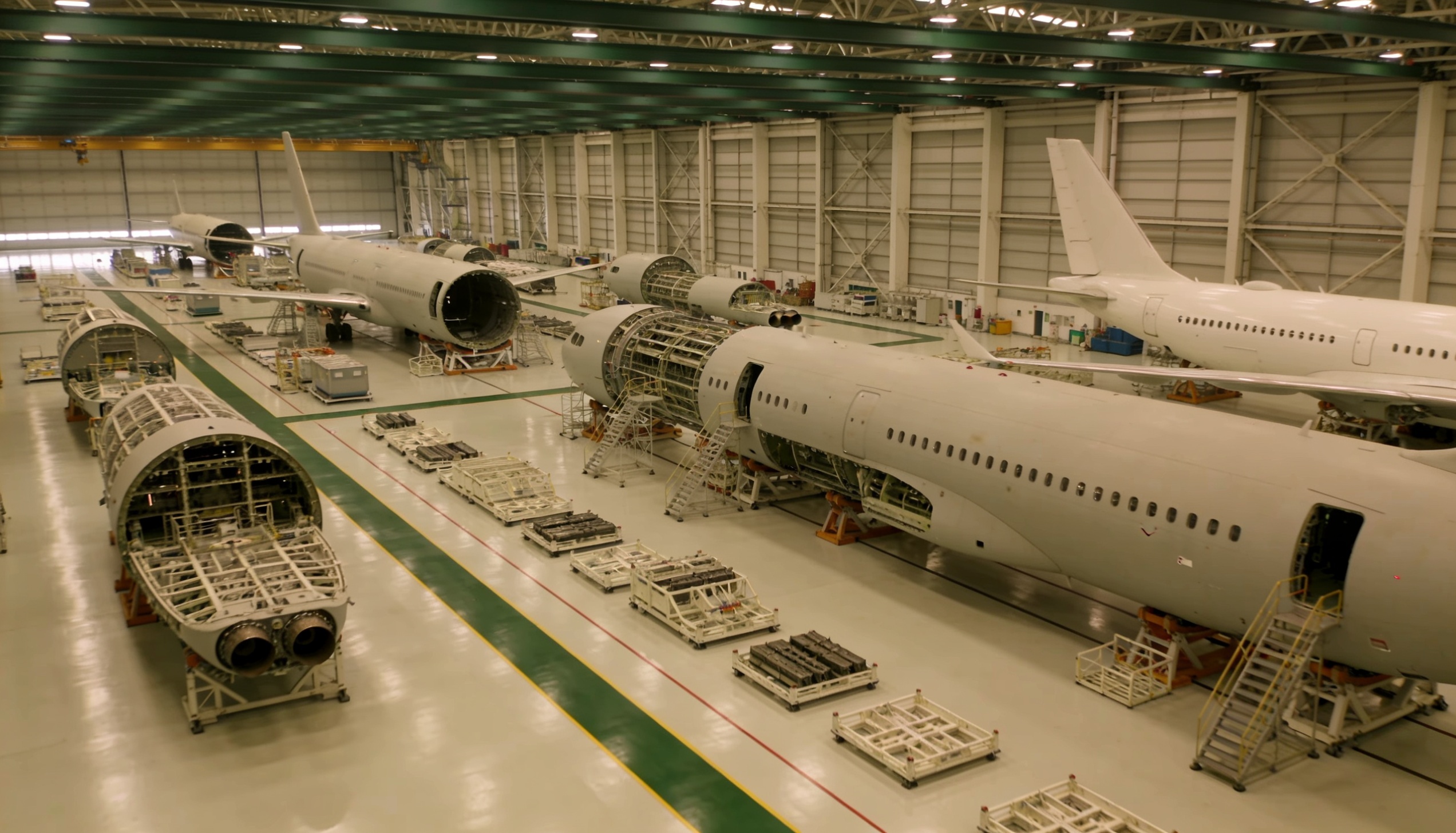
The numbers
- Exports (2024): ≈ MAD 26.4 billion (~$3 billion), up ~14.9% year-on-year. (A separately-cited $2.16 billion figure circulates and does not reconcile cleanly with the MAD-denominated ~$3bn — treat the precise dollar figure as indicative pending a single official source.)
- Trajectory: from under MAD 1 billion in 2004 to over MAD 26 billion in 2024 — roughly a twentyfold rise in two decades.
- Firms: ~142–155 aerospace companies.
- Jobs: ~23,000–27,000 direct, women >40% of the workforce; total employment impact (incl. indirect) exceeds 70,000.
- Local integration: local-content rate above 40% and rising.
The hub: Nouaceur / Midparc
The cluster's centre of gravity is the Midparc free zone in Nouaceur, by Mohammed V airport: 40+ aerospace firms across ~125 hectares. The fiscal terms drive the clustering — 0% corporate tax for the first 5 years, then 8.75% for 20 years, VAT exemption and duty-free equipment imports. Anchor tenants include Safran, Spirit AeroSystems, Airbus, Hexcel, Pratt & Whitney, Thales and Boeing-ecosystem suppliers. By specialty the base skews to wiring, sheet-metal/machining, composites and surface treatment.
Moving up: aerostructures, engines and MRO
- Safran engine complex (Nouaceur): a €350m investment launched October 2025 — Africa's first aircraft-engine assembly ecosystem.
- LEAP assembly: a ~13,000 m² plant, up to ~350 engines/year, ~300 jobs, targeted for end-2027 — making Morocco the second global LEAP-1A assembly site after France.
- LEAP MRO: a ~25,000 m² maintenance unit (~€120m), up to ~150 engines/year and ~600 new jobs by 2030. The engine ecosystem implies ~900 qualified direct jobs by 2030, plus several thousand indirect.
- Spirit / Airbus: the Casablanca/Midparc site (~25,000 m², ~800 workers) makes A220 leading-edge wing components and A321 flap-track stringers; Airbus finalised its acquisition of Spirit in December 2025.
- Boeing network: 120+ suppliers and 8,700+ jobs, targeting ~$1bn annual export turnover.
Forward ambition
GIMAS and the government aim to roughly double export revenue within ~5 years at ~15% annual growth, with a planned Nouaceur platform extension, and to double sector employment by 2030. These are stated targets, not delivered outcomes.
What it means for property
The read-through is qualitative, not a price forecast. Skilled, well-paid, export-linked aerospace employment is concentrated in the Nouaceur / Casablanca-Settat corridor (Midparc plus the Mohammed V airport zone), and free-zone fiscal incentives anchor it to that fixed geography. The existing ~23,000–27,000 direct jobs, the ~900 new high-skill Safran roles and ongoing FDI clustering underpin residential and commercial demand along the corridor — a demand-side tailwind, not a guaranteed price outcome.
The honest ledger
What it proves:
- ~20x export growth in two decades to ≈ MAD 26.4bn (~$3bn) in 2024.
- Large, geographically concentrated employment in the Nouaceur / Casablanca-Settat corridor.
- Named multinationals (Safran, Spirit/Airbus, Boeing network, Pratt & Whitney, Thales, Hexcel) anchored at Midparc/Nouaceur.
- A demonstrable move up the value chain into aerostructures and engine assembly/MRO.
What it still has to prove:
- That aerospace jobs translate into measurable property-price appreciation in any specific Casablanca/Nouaceur sub-market.
- The exact export figure — the MAD-denominated ~$3bn and the cited $2.16bn don't reconcile (a source/scope discrepancy).
- Delivery of the 2027–2030 engine-assembly, MRO and employment targets, which are commitments.
*Sourced (researcher + editor); the automated fact-check pass was session-limited, so specific figures are flagged where sources diverge. Forward-looking targets are commitments. Analysis, not investment advice.*
How big is Morocco's aerospace sector?
Exports reached ≈ MAD 26.4 billion (~$3 billion) in 2024, up ~14.9% year-on-year, across roughly 142–155 firms employing 23,000–27,000 people directly and supporting more than 70,000 jobs nationwide including indirect roles.
Where is the cluster located?
Its centre is the Midparc free zone in Nouaceur, by Casablanca's Mohammed V airport — 40+ aerospace firms across ~125 hectares. The wider Casablanca-Settat region hosts the anchor plants of Safran, Spirit/Airbus, Boeing-network suppliers and Pratt & Whitney.
Why are companies clustering in Midparc/Nouaceur?
The Midparc free zone offers 0% corporate tax for the first 5 years, 8.75% for the next 20, VAT exemption and duty-free equipment imports — alongside an established supplier base, a workforce over 40% women, and local integration above 40% and rising.
Is Morocco moving beyond low-value subcontracting?
Yes. Safran is investing €350m to build Africa's first aircraft-engine assembly ecosystem at Nouaceur — a LEAP assembly plant (up to ~350 engines/year, targeted end-2027, the second LEAP-1A site after France) and a LEAP MRO unit (~600 jobs by 2030). Spirit/Airbus makes A220 and A321 aerostructures locally.
What does the aerospace cluster mean for property?
It concentrates durable, high-skill, export-linked employment in the Nouaceur / Casablanca-Settat corridor — ~23,000–27,000 direct jobs today plus ~900 new Safran roles by 2030 — which underpins real-estate demand near Midparc and the Mohammed V airport zone. A demand-side tailwind, not a guaranteed price outcome.