The TGV to Marrakech: Morocco's under-priced 2030 catalyst
Al Boraq — Africa's first high-speed line — already runs Tangier to Casablanca at 350 km/h. The extension under construction to Marrakech (~430 km) would put Tangier within ~2h40 of Marrakech ahead of the 2030 World Cup, on a ~MAD 96bn national rail programme. It quietly re-prices the inland and corridor markets — a real catalyst that's easy to miss next to the stadiums.
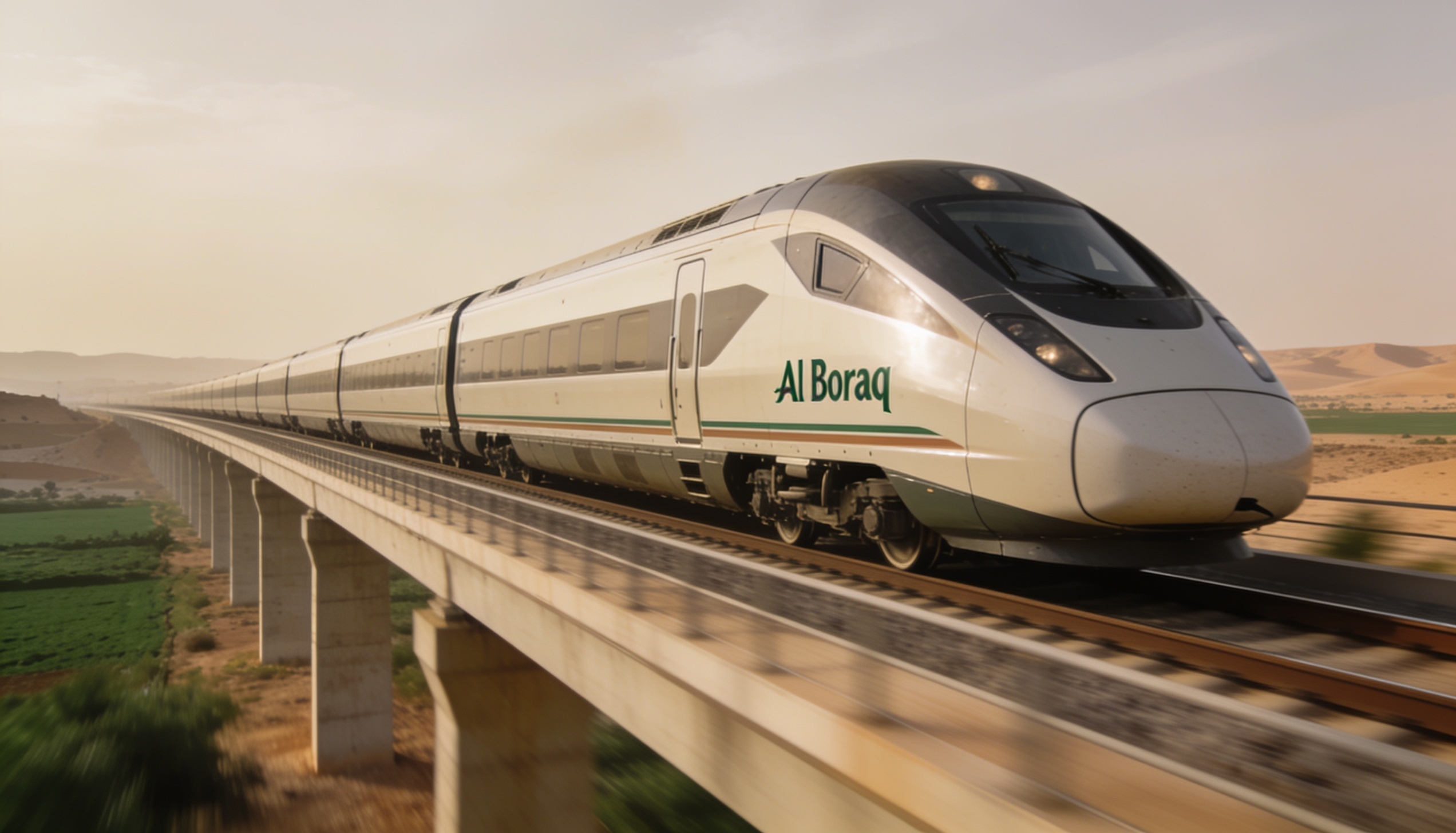
What already exists
Al Boraq is Africa's first high-speed railway: opened in November 2018, it runs Tangier to Casablanca at up to 350 km/h, cutting the journey to about 2h10. It is not a plan — it has been carrying passengers for years, operated by ONCF.
What's being built
The next phase extends high-speed service from Kenitra to Marrakech (~430 km of new line), linking Tangier–Rabat–Casablanca–Marrakech on one spine. It sits inside a national rail programme costed at roughly MAD 96 billion (line plus rolling stock — ONCF has ordered new high-speed trainsets from Alstom). Operation is targeted for around 2029–2030, ahead of or alongside the FIFA World Cup. (The date and cost are official targets — indicative until delivered.)
Why it's the under-priced catalyst
Next to the stadiums, the rail extension gets less attention — but it changes the economic geography. Post-extension, Marrakech sits roughly 2h40 from Tangier by train — the range of Paris–Bordeaux. A luxury market that today depends on a flight becomes a coffee-and-laptop train ride from the northern corridor; Kenitra and Rabat tighten into a single high-speed commuter spine with Casablanca. Infrastructure of this kind doesn't reverse when a tournament ends — it re-rates the catchment for a decade.
What it means for property
- Marrakech — the trophy/lifestyle market becomes accessible by rail from the north, widening its buyer pool beyond air travellers.
- Kenitra / Rabat — pulled into the Casablanca high-speed commute, on top of the industrial build-out (autos, the planned battery gigafactory).
- Tangier — the northern anchor of the spine, already the industrial-port hub.
The mechanism is connectivity, not a price guarantee: faster access widens demand catchments; it does not, by itself, set a yield.
The honest ledger
What it proves:
- The high-speed spine is real and operating (Tangier–Casablanca since 2018), not a render.
- The Marrakech extension is funded within a named ~MAD 96bn programme with rolling stock ordered.
What it still has to prove:
- The ~2029–2030 opening date and final cost — large rail projects slip; treat them as targets.
- That improved connectivity translates into measurable price or yield gains in Marrakech, Kenitra or Rabat — a thesis, not a measured outcome.
*Editor-authored and sourced to ONCF / Ministry of Transport; the automated fact-check pass was session-limited, so the extension's date and cost are flagged indicative. Analysis, not investment advice.*
Does Morocco already have a high-speed train?
Yes. Al Boraq, Africa's first high-speed line, has run Tangier to Casablanca at up to 350 km/h since November 2018, cutting the trip to about 2h10. It is operated by ONCF and has been carrying passengers for years.
Is the TGV being extended to Marrakech?
Yes — a ~430 km high-speed extension from Kenitra to Marrakech is under construction, linking Tangier–Rabat–Casablanca–Marrakech, within a national rail programme costed at roughly MAD 96 billion (line plus new Alstom trainsets). Operation is targeted around 2029–2030 — an official target, indicative until delivered.
Why is the rail extension called an under-priced catalyst?
Because it gets less attention than the World Cup stadiums but changes the economic geography: once open, Marrakech is roughly 2h40 from Tangier by train (Paris–Bordeaux range), turning a flight-dependent luxury market into a rail ride from the northern corridor — a re-rating that outlasts the tournament.
Which property markets does the TGV affect?
Marrakech (the trophy/lifestyle market becomes rail-accessible from the north), Kenitra and Rabat (pulled into the Casablanca high-speed commute on top of their industrial build-out), and Tangier (the northern anchor). The mechanism is connectivity widening demand catchments — not a guaranteed yield.
When will the Marrakech high-speed line open?
The stated target is around 2029–2030, ahead of or alongside the 2030 World Cup. Large rail projects can slip, so treat the date — and the ~MAD 96bn cost — as official targets rather than delivered facts.