Morocco's EV-battery gigafactory wave: Kenitra and Jorf Lasfar
Morocco is turning its phosphate base into a European-facing battery supply chain — Gotion's $5.6–6.5bn Kenitra gigafactory (Africa's first, targeting Q3 2026) and the $2bn COBCO cathode-precursor plant at Jorf Lasfar (live since June 2025). For property: a large industrial-jobs wave on Kenitra and the Jorf Lasfar / Casablanca corridor.
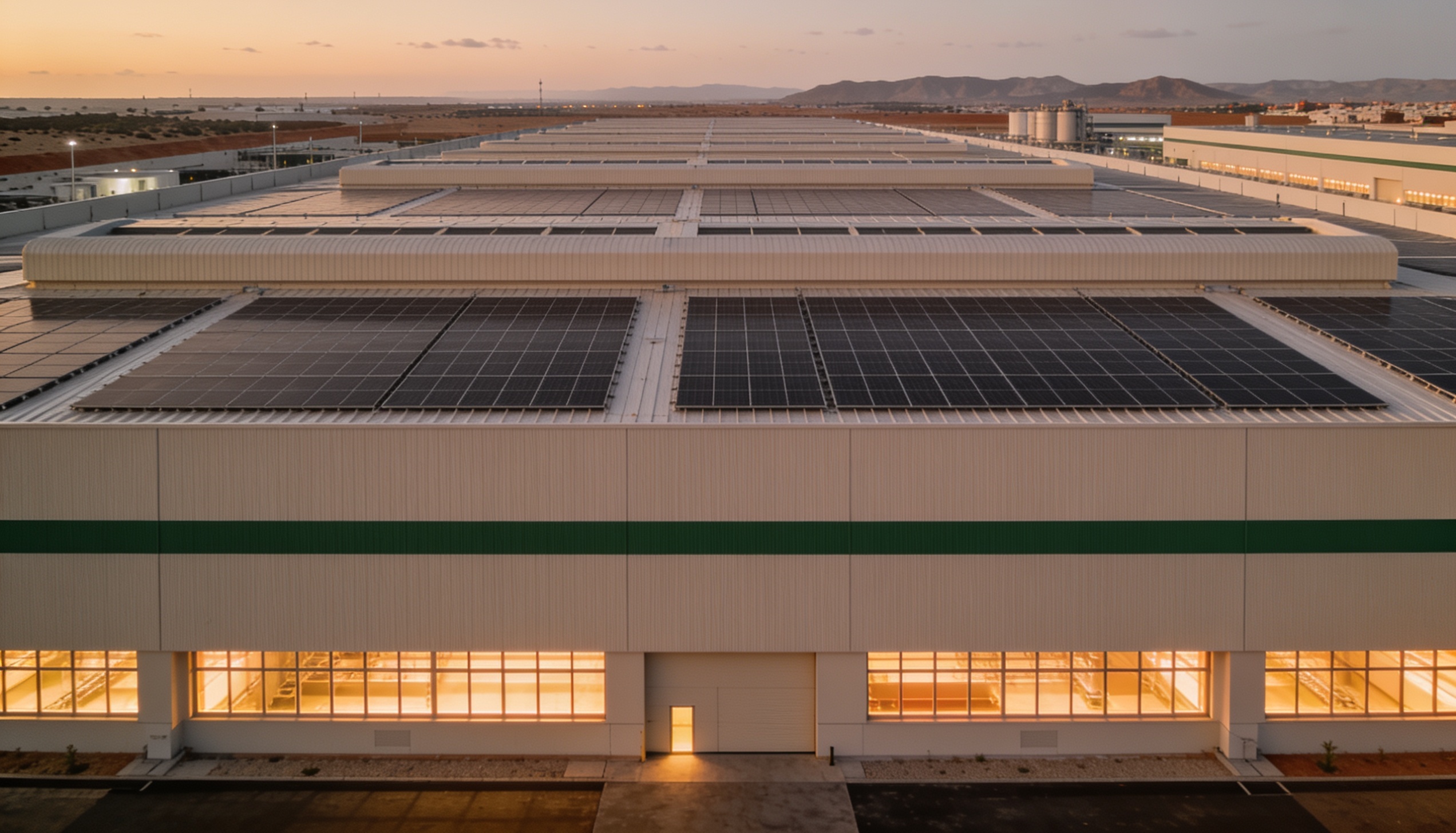
The anchor: Gotion's Kenitra gigafactory
Gotion High-Tech is building the first EV-battery gigafactory in Africa and the wider Middle East & Africa region, in Kenitra. Total planned investment across all phases is USD 5.6–6.5 billion, with a finalised Phase 1 of $1.3 billion on 156 ha under a November 2024 agreement. Capacity is designed to ramp from 20 GWh at start to 40 GWh in Phase 2 and up to 100 GWh across five phases, with production targeted for Q3 2026. The plant will also make cathodes and anodes, with roughly 85% of output exported — an export platform for European carmakers, not a domestic-demand play.
The labour footprint is the property-relevant figure: ~17,000 direct and indirect jobs, including ~2,300 highly skilled at full build-out. The Moroccan state is co-invested via CDG (Caisse de Dépôt et de Gestion), a dedicated $800 million ACWA Power + Gotion wind plant is planned to power it, and the AfDB has disclosed the project ("Gotion Morocco 20 GWh Giga Factory," March 2026) — institutional signals that Phase 1 is financed and proceeding.
The materials layer: COBCO at Jorf Lasfar
COBCO is a joint venture of CNGR Morocco New Energy (50.03%) and Al Mada (~50%), a $2 billion deal signed in 2023. Its first unit — Morocco's first Li-ion battery-materials plant, producing NMC precursor cathode (pCAM) — was inaugurated on 25 June 2025 with 40,000 tons of initial capacity, on a 200+ hectare site 125 km south of Casablanca. Target capacities are 120,000 t/yr NMC precursors, 60,000 t/yr LFP cathodes and 30,000 t/yr recycling — an ultimate output equivalent to ~70 GWh/yr, enough for up to ~1 million EVs a year. A pCAM supply agreement with Umicore (March 2025) locks in European offtake.
The phosphate logic
The structural advantage is resource-based: Morocco holds ~70% of world phosphate reserves, and Jorf Lasfar concentrates ~11% of global phosphoric-acid capacity. OCP's $13 billion green programme (2023–2027) is wiring that base into batteries, targeting 30,000 tons of LFP intermediates by 2027. And Morocco's EU and US free-trade agreements let China-linked makers serve Western markets past tariffs. The principal execution risk is energy: a battery load this large is a real test for a still-largely-coal-fired grid — which is why the dedicated wind plant matters.
Property read: Kenitra
Kenitra is anchored by the Atlantic Free Zone (MEDZ), an Industrial Acceleration Zone ~40 km north of Rabat — around 350 ha, expanded toward ~600 ha in 2025 on strong demand. It already hosts a Renault ecosystem, Adient and Citic Dicastal, with the zone targeting 20,000+ jobs before Gotion. Indicative residential asking prices run ~600,000 to 1,500,000+ MAD for apartments. The gigafactory adds a second, larger employment wave onto an already-industrialising base.
Property read: the Jorf Lasfar / Casablanca corridor
COBCO sits 125 km south of Casablanca, within the OCP-and-industrial-port cluster of the El Jadida–Casablanca corridor. Demand here is driven by skilled industrial in-migration around the materials and port complex rather than a pre-existing residential market — earlier-stage and less liquid than Kenitra, but with a heavier industrial anchor.
The honest ledger
What it proves:
- A genuine, partly-financed battery supply chain — a gigafactory (Gotion, Q3 2026) plus operating cathode-precursor materials (COBCO, since June 2025) — not just assembly.
- It is wired to Morocco's phosphate base (LFP) and to EU/US market access, with locked European offtake (Umicore) and state co-investment (CDG).
- A large, durable industrial-jobs base concentrating on Kenitra, on top of its existing auto cluster.
What it still has to prove:
- Delivery on schedule — the Q3 2026 start and multi-phase ramp to 100 GWh are commitments, not outcomes.
- Grid adequacy — a battery load this size tests a coal-heavy grid; the dedicated wind plant is the mitigant, not yet built.
- That Kenitra and corridor property prices actually move with the employment base — the catalogue tracks that, rather than the announcements.
*Figures are sourced and adversarially fact-checked (one correction: the Atlantic Free Zone expanded toward ~600 ha in 2025, not by ~9 ha). Forward-looking targets are commitments. Analysis, not investment advice.*
What is Morocco's first EV-battery gigafactory?
Gotion High-Tech's plant in Kenitra is the first EV-battery gigafactory in Africa and the Middle East & Africa region, with total planned investment of USD 5.6–6.5 billion across all phases and production targeted for Q3 2026.
What does the COBCO plant at Jorf Lasfar produce?
COBCO — a CNGR (50.03%) / Al Mada (~50%) JV — runs Morocco's first Li-ion battery-materials plant. Its first unit inaugurated June 2025 with 40,000 tons of NMC precursor capacity, targeting 120,000 t/yr precursors, 60,000 t/yr LFP cathodes and 30,000 t/yr recycling, or ~70 GWh/yr equivalent.
How is Morocco's phosphate linked to batteries?
Morocco holds ~70% of world phosphate reserves and Jorf Lasfar holds ~11% of global phosphoric-acid capacity. OCP's USD 13 billion 2023–2027 green programme channels this into LFP cathode chemistry, targeting 30,000 tons of LFP intermediates by 2027.
How many jobs will the Gotion gigafactory create?
About 17,000 direct and indirect jobs, including ~2,300 highly skilled, at full build-out — added on top of Kenitra's existing auto cluster (Renault, Adient, Citic Dicastal; the Atlantic Free Zone targets 20,000+ jobs).
What are the main risks to this thesis?
Energy is the headline risk: the large battery load tests a still-coal-heavy grid, which is why an USD 800 million dedicated wind plant is planned. Timing (Q3 2026 start and a multi-phase ramp) and whether property prices track the employment base are the other open questions.