OCP and the Moroccan phosphate-to-fertilizer engine
Morocco holds ~70% of the world's phosphate reserves, and OCP has turned that into downstream fertilizer leadership (~31% of the world phosphate-product market) plus a ~$13bn green program — concentrating property demand across four corridors: Khouribga, Jorf Lasfar/El Jadida, Casablanca and Ben Guerir.
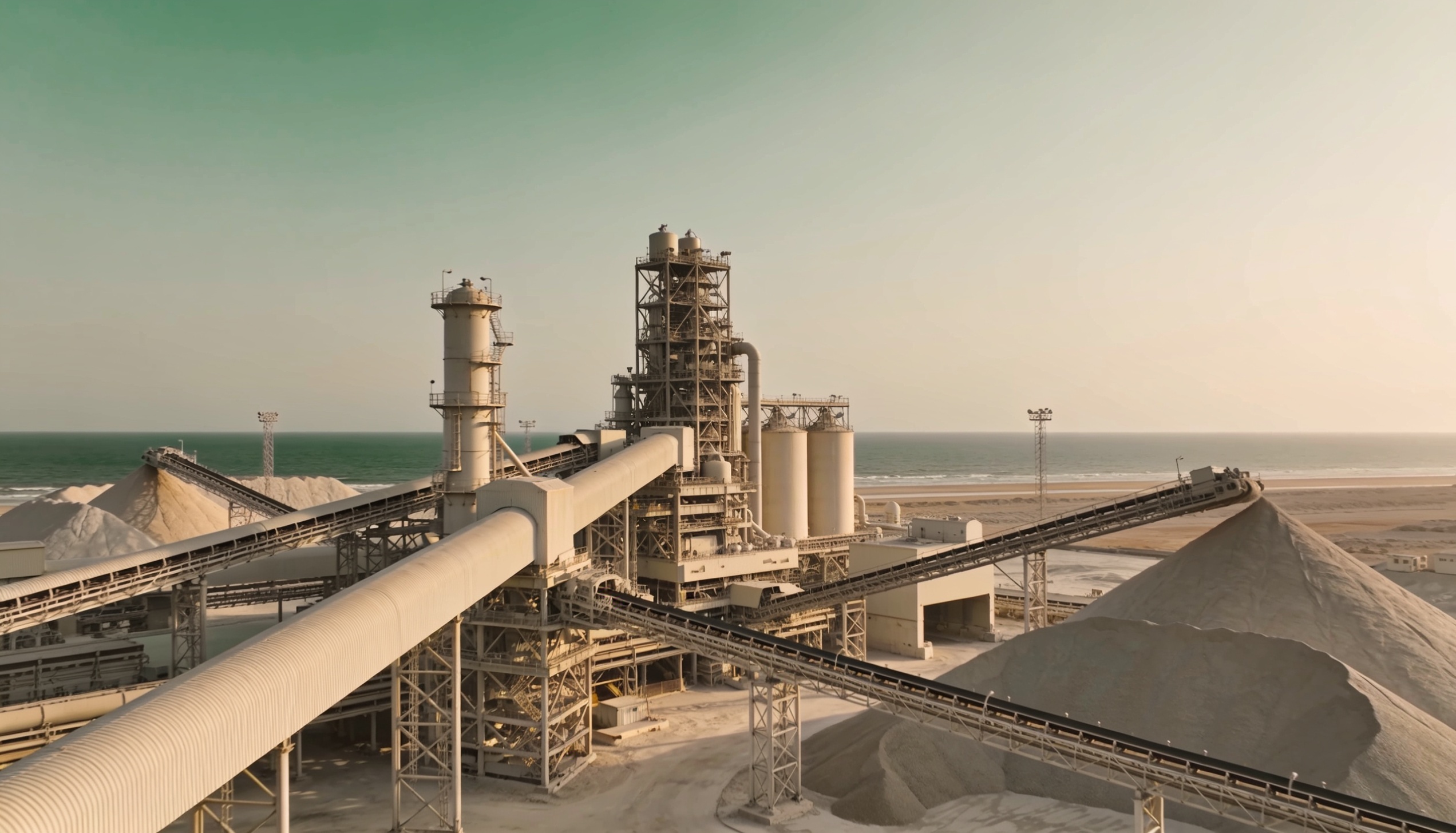
The resource base: a structural monopoly
Morocco holds roughly 70% of the world's phosphate rock reserves — the largest share of any country (the Moroccan minister has cited a precise 69.44%). The scale is not just dominant but durable: at current production rates Morocco's deposits could last well over a millennium (>1,300 years), against a few decades for the next-largest holders — China and the US are estimated to deplete within roughly the 2055–2075 window. This is the structural foundation of OCP's pricing power and of Morocco's long-horizon industrial planning.
Moving up the value chain
Reserve dominance alone is a commodity story. The diversification thesis rests on OCP capturing the downstream margin: it holds roughly 31% of the world phosphate-product (fertilizer) market and ranks as the world's largest fertilizer manufacturer. The economics are visible at group scale — FY2023 revenue of MAD 91.27bn (~$9.1bn) with net profit of MAD 14.29bn (~$1.4bn), down 49% year-on-year as the 2022 price spike normalised.
The forward push is a ~$13bn green investment program over 2023–2027, which deepens value-add along several axes:
- Fertilizer capacity: from ~12 Mt to 20 Mt per year by 2027.
- Green ammonia (Power-to-X): 1 Mt by 2027, scaling to 3 Mt by 2032, to replace imported ammonia. A flagship complex south of Tarfaya is planned at 1 Mt/yr capacity, powered by a dedicated ~3.8 GW solar-and-wind farm.
- Renewable power: 5 GW of clean energy by 2027 and ≥13 GW by 2032, with 100% green-powered industry targeted for 2027.
- Water decoupling: 560 million m³ of desalination capacity, separating industrial water use from agriculture and freshwater.
The logistics spine
The two core industrial nodes are physically bound. Khouribga is OCP's flagship basin — producing ~70% of OCP output, with its first mine opened in 1921 — making it a mono-industry town economically tied to OCP. It connects to the coast via the world's longest phosphate slurry pipeline: a ~187 km main line (235 km total network), 900 mm diameter, moving 4,400 t/hr at ~38–40 Mt/yr capacity since commissioning in 2014. The pipeline's terminus, Jorf Lasfar near El Jadida, is being built into the world's largest fertilizer production hub — phasing in 11 Mt/yr of phosphate fertilizer and 6 Mt/yr of phosphoric acid, with a new 500,000 t/yr TSP line commissioned in 2025.
What it means for property
OCP is one of Morocco's largest employers, with ~17,000 employees in Morocco concentrated in the mining and industrial corridor (Khouribga, Jorf Lasfar) plus its Casablanca HQ. The knowledge-economy layer extends the footprint: OCP funds the Mohammed VI Green City (launched 2009) and UM6P at Ben Guerir (inaugurated January 2017, a ~33-hectare campus ~70 km north of Marrakech), a university now ranked 1st in North Africa and 14th in the Arab World (THE Arab University Rankings 2026). UM6P is also extending into the OCP-developed Mazagan urban pole at El Jadida (urban-pole completion targeted around 2034), pushing the knowledge footprint toward the Jorf Lasfar market.
Taken together — as an analytical framing, not a measured real-estate dataset — the engine concentrates demand into four OCP-linked submarkets (a selective read; OCP also operates at Safi, Youssoufia and Laâyoune):
- Khouribga — mine and worker housing, single-employer dependent.
- Jorf Lasfar / El Jadida — industrial and processing labour, plus the planned UM6P campus.
- Casablanca — HQ, finance and white-collar demand.
- Ben Guerir — UM6P / Green City academic and human-capital demand.
The honest ledger
What it proves:
- Morocco's reserve dominance (~70%, >1,300-year longevity) is a structural, durable raw-material advantage.
- OCP has genuinely moved downstream — ~31% of the world phosphate-product market, the world's largest fertilizer manufacturer, with capacity rising from ~12 Mt to 20 Mt/yr.
- A funded, specific green / Power-to-X build-out exists (~$13bn; green ammonia, renewables and desalination targets through 2027–2032).
- The four property nodes are physically and institutionally linked to OCP capital — the pipeline, the HQ, the employment base and UM6P.
What it still has to prove:
- That the stated targets (green-ammonia tonnages, GW capacity, the El Jadida campus) are delivered on schedule — these are commitments, not realised outcomes.
- Any specific price movement, rental yield or capital appreciation in the four corridors — these are demand drivers, not measured returns.
- That single-employer dependence (especially Khouribga) is a net positive — concentration risk cuts both ways.
- Causation between OCP investment and local housing demand — the corridor map is an analytical framing without a cited price/transaction dataset.
*Figures are sourced and were adversarially fact-checked; forward-looking 2027–2032 targets are OCP commitments, indicative pending delivery. Analysis, not investment advice.*
How much of the world's phosphate does Morocco control?
Roughly 70% of global phosphate rock reserves — the largest share of any country, with Morocco's minister citing a precise 69.44% figure. At current rates the deposits could last well over a millennium (>1,300 years), versus depletion within roughly the 2055–2075 window for China and the US.
Is OCP just a rock exporter, or does it process fertilizers?
It is the world's largest fertilizer manufacturer and holds roughly 31% of the world phosphate-product market, evidencing a deliberate move up the value chain from raw rock to processed fertilizers. Its 2023–2027 green program raises fertilizer capacity from ~12 Mt to 20 Mt per year.
What is OCP's green ammonia / Power-to-X plan?
OCP targets 1 Mt of green ammonia by 2027 and 3 Mt by 2032 to replace imported ammonia. A flagship 1 Mt/yr complex south of Tarfaya will be powered by a dedicated ~3.8 GW solar-and-wind farm, alongside 5 GW of clean energy by 2027 (≥13 GW by 2032) and 560 million m³ of desalination capacity.
Which property markets does the phosphate engine drive?
As an analytical framing (not a measured dataset), four OCP-linked submarkets: Khouribga (mine/worker housing), Jorf Lasfar/El Jadida (industrial and processing labour), Casablanca (HQ and finance) and Ben Guerir (UM6P/Green City knowledge town). Khouribga and Jorf Lasfar are bound into one logistics corridor by the world's longest phosphate slurry pipeline.
How big is OCP within Morocco's economy?
OCP posted FY2023 revenue of MAD 91.27bn (~$9.1bn) and net profit of MAD 14.29bn (~$1.4bn), down 49% year-on-year after the 2022 price spike normalised. It employs roughly 17,000 people in Morocco, concentrated in Khouribga, Jorf Lasfar and its Casablanca HQ.